
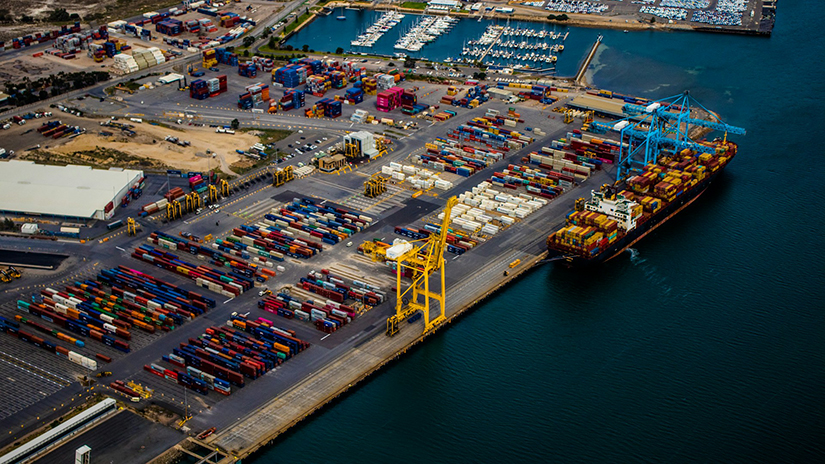
Port fees became the latest weapons in the U.S.-China trade war on Oct. 14 as Americans started penalizing shippers for using Chinese built or owned vessels and China reciprocated with matching fees.
The fees for docking and unloading in ports kicked in as trade tensions between the world’s two largest economies were heating up: China’s Oct. 9 announcement of plans for greater control of rare earth exports sparked a suggestion of a new, 100% tariff on Chinese goods by U.S. President Trump.
But the U.S. had been planning port fees since early this year. China’s retaliatory move to hit U.S. ships with similar fees was a surprise. Announced Oct. 10, the Chinese fees caused concerns among shippers.
Despite an apparent trend toward escalating trade barriers, both China and the U.S. sought to reassure markets that they would work toward de-escalation.
Under the U.S. port fees that went into effect on Oct. 14, vessels built in China and owned by firms with links to China will be charged port fees of $50 per net ton of the cargo-carrying capacity of the vessel, CNBC reports. Non-Chinese carriers operating Chinese-built vessels would be charged $18 per net ton or $120 per container—whichever is higher of the two.
U.S. port fees could top $1 million for a ship carrying more than 10,000 containers, and would rise annually through 2028, according to analyst estimates cited by Reuters. The major Chinese shipper COSCO could face an additional $1.5 billion in costs from the fees in 2026, according to a widely cited report by HSBC Bank.
As of Oct. 14, the fees for U.S. vessels berthing in Chinese ports is 400 yuan ($56) per net ton and it will rise to 1,120 yuan ($157.16) per ton in 2028, Reuters reported.
Taken by surprise
“While the levying of U.S. port fees on Chinese-owned ships from next week is mostly factored in by the market and has provisions for exemptions, China’s decision for a tit-for-tat on a three-day notice has taken the maritime world by surprise, with fears that it can potentially be highly disruptive,” according to an analysis by S&P Global.
Plans for the U.S. restrictions on Chinese shipping began before President Trump took office. Early in January, the U.S. Department of Defense “blacklisted” several companies for alleged ties to the Chinese military—including the shipper COSCO and shipbuilders China State Shipbuilding Corp (CSSC), China Shipbuilding Trading Co (CSTC), and Guangzhou Wenchong Shipyard.
Shortly after President Trump took office, the U.S. Trade Representative announced an investigation into using port fees as a way to balance unfair shipping practices by China. In a March 4 speech in Congress, President Trump said the fees were part of a strategy to encourage shipbuilding, saying, “We used to make so many ships, we don’t make them anymore very much.”
While markets nervously watch increasing trade war aggression, there is still hope for de-escalation, including trade talks between President Trump and Chinese President Xi Jinping.
U.S. Treasury Secretary Scott Bessent on Oct. 15 said Washington did not want to escalate the trade conflict with China and added that President Trump is ready to meet President Xi in South Korea for trade talks later this month.