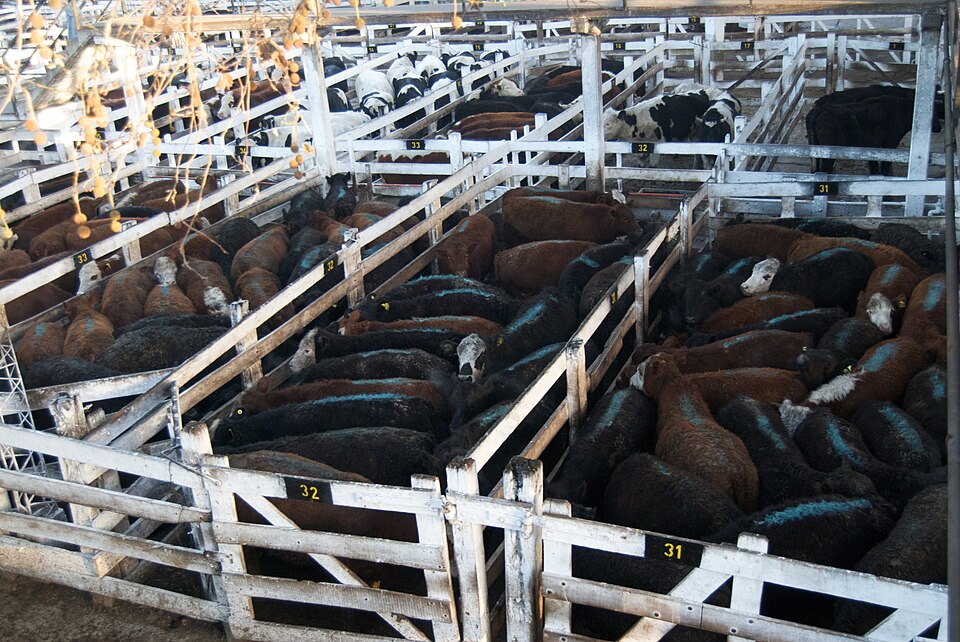
From barbecue to burgers to steak, beef is omnipresent in the American diet, but everyday Americans are despairing to find prices rising month after month with no relief in sight. Consumers are asking why beef prices are so resistant to every effort to lower them.
The answer to that question involves a combination of COVID, climate, short-sighted quick fixes by ranchers and policy. In the current situation, price relief may be at least a couple of years away.
The American cattle shortage
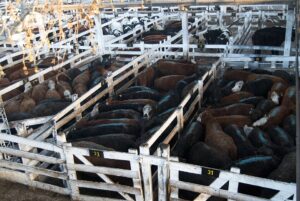
At 86.2 million heads, the 2026 cattle herd is the smallest since 1951, a year in which there were 185 million fewer Americans to feed. Modern U.S. herd sizes have been in freefall ever since the COVID pandemic, during which meatpackers limited purchases from cattle ranchers to cope with staffing limitations.
Drought has prevented a post-COVID recovery. From 2022 to 2024, more than 50% of the total US area was in a state of drought, with the key cattle-producing states of the Midwest being the hardest hit. In the drought’s first year alone, feed, corn, and hay shot up 22%, 30%, and 45% respectively.
These increased costs forced ranchers to sell their reserve of heifers to the slaughterhouse instead of retaining them for breeding, temporarily stalling rising beef prices for the rest of the year.
But this short-term survival move led to long-term effects. It takes approximately 30 months from a cow’s birth to produce its first calf capable of breeding. Had the heifers sent to the slaughterhouse from 2022 been bred instead, many of their calves would have themselves given their first birth in 2025. Instead, the 2025 calf crop was the lowest on record at 32.9 million head, down 630,000 from the previous year and marking seven consecutive years of decline.
This means that even if American cattle ranchers decided today to reserve their calves for breeding instead of premature slaughter—ignoring the costs that decision entails—the earliest consumers would see a price decrease via herd growth would be 2028.
The government’s response, or ‘A Tale of Two Tariffs’
That is bad news for President Trump, who loathes the idea of his works bearing fruit just in time for his successor to take credit. Beef is a regular talking point for the president, who begrudgingly points it out as the exception to the alleged price decreases for foodstuffs across the board since his term began.
Prices and inflation are by far the government’s worst performing metric in terms of public approval. Americans are more aware of how prices change between their regular trips to their grocery store than with nonessential luxuries. Left unaddressed, their negative consumer sentiment spells ill portents for the government in the upcoming midterms.
The government has sought to address the growing crisis through President Trump’s self-professed favorite policy: tariffs.
In November 2025, President Trump imposed an executive order revoking a 40% ad valorem duty rate on Brazilian beef exports over the tariff-free “Other Country” MBN quota of 65,000 tons per year. For context, the Brazilian beef export industry surpassed the 65,000 tons limit in the first 17 days of 2025, and the first six days of 2026. Aside from being the world’s largest beef exporter, Brazil supplied 24% of America’s beef in 2025, driven by the declining size of domestic herds.
In another move to fortify the domestic supply, the president signed a deal in February to import an additional 80,000 tons of Argentinian beef tariff-free, on top of the 20,000 tons already agreed upon. Like the Brazilian tariff agreement before it, the Argentinian deal was designed to ease costs for the consumer but provoked an intensely negative response from domestic cattle ranchers.
Republicans from eight different states penned an open letter to the president urging “future decisions are made with full transparency, sound science, and a firm commitment to the U.S. cattle industry.”
To their dismay, government policy is heading in the opposite direction. The Justice Department’s newly established Food Supply Chain Security Task Force is investigating the “Big 4” meatpacking companies, who collectively control 85% of the industry, on allegations of collusion and price fixing.
Perhaps there is no solution that pleases ranchers, representatives, meatpackers, and consumers, but the government has consistently made choices aimed at lowering consumer costs even at the expense of other groups.
That this consumer-first strategy is still not enough to bring beef prices down should raise alarm bells.
…And yet, we eat
Throughout COVID, drought, and declining cattle herds, American beef consumption has proven remarkably stable. With the average American eating more than 50 pounds per year, our appetite makes the United States the world’s largest total consumer. All this is to say that perhaps consumers will continue to stomach increasing beef prices without eliminating it from their shopping lists.
Since the supply and imports are not enough, we may not have a choice.
Photo: Beatrice Murch