
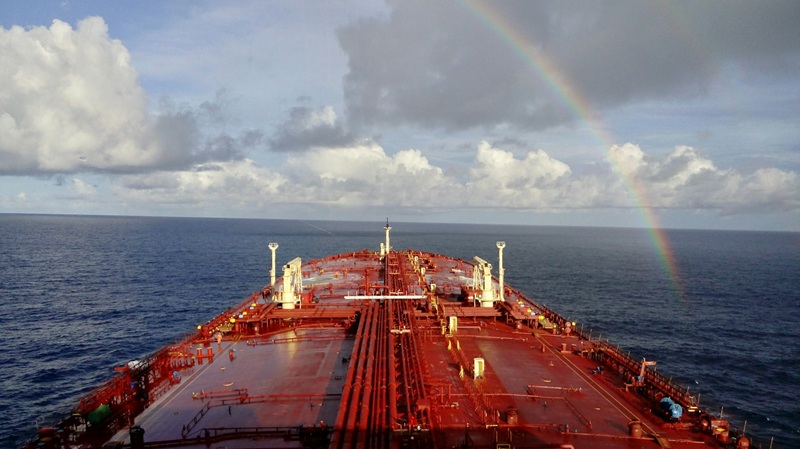
As the industry adjusts to the U.S.-Iran war, crude oil is finding new ways to flow downstream. But Middle East refineries still struggle to export, limiting diesel supplies, and analysts say Iran’s intensifying attacks could reduce Strait of Hormuz traffic again.
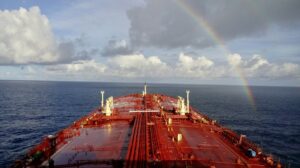
Iranian attacks on oil tankers in the Strait of Hormuz ratcheted up in recent days, after weeks of relative calm, and the faster pace is continuing, with one attack reported Oct. 4 and five reported Oct. 5. Nearly 20 commercial ships have come under attack in the past month, CNBC reported on Oct. 6, citing the Joint Maritime Information Center.
There are concerns that more frequent Iranian attacks on tankers could severely limit oil supplies, but for now Middle East exports are rising.
With the exception of Iran, Middle East oil was exported at 81% of prewar levels in September, according to Vortexa. As for Iran, U.S. naval blockades have apparently proven effective, reportedly stranding nearly 50 Iranian tankers in the Persian Gulf and depleting Iran’s offshore stockpile in the waters off Malaysia.
The increase in supply from non-Iranian exporters has been made possible by several factors, according to Oilprice.com:
- More tankers are willing to take chances with travel through the strait.
- The Saudi East-West oil pipeline carries crude to the Yanbu port on the Red Sea. Though the pipeline was damaged in an attack by Houthi militants on Sept. 10, oil flow restarted Sept. 22, and the line was shipping 5.8 million barrels a day by Oct. 6.
- The United Arab Emirates pipeline to the port of Fujairah on the Gulf of Oman is also enabling exports.
- Small shuttle vessels are being used to transport crude through the Strait of Hormuz. The vessels can sail close to the Omani coastline, which is patrolled by the U.S. Navy, and transfer their cargoes to oil tankers in secure waters in the Gulf of Oman.
Apparently due to the increased supply, the price of Brent crude was $108.75 per barrel on Sept. 15 but had dropped below $100 per barrel by Oct. 6, according to Oilprice.com.
Diesel supply still suffers
While crude oil prices were dropping, diesel prices went in the other direction, from $6.27 per gallon in the U.S. on Sept. 15 to $6.32 on Oct. 6, according to AAA.
Diesel fuel supply has been less elastic, as many Middle Eastern refineries have been damaged by Iranian attacks, and many others cannot export without transport through the Strait of Hormuz, according to the International Energy Agency’s September Oil Market Report.
Middle Eastern refineries and shipping corridors account for nearly 19% of global diesel exports, according to The Wall Street Journal.
“The closure of the Strait of Hormuz and attacks on Gulf refineries lowered regional refinery runs by 27% to around 6.5 million barrels per day (mb/d) in Q2 2026, sharply cutting regional product exports, which exceeded 5 mb/d before the war,” according to the Columbia Center on Global Energy Policy.
While crude may be easier to transport, diesel is constrained by a reality that ultimately impacts global energy supplies: There will be no return to normalcy until the Strait of Hormuz is a safe place for shipping.